
Favorite Products For Handicap Bar Installations To Improve Safety And Comfort
Browse a selection of trusted products designed to provide safety, stability, and comfort in handicap bar installations across various locat
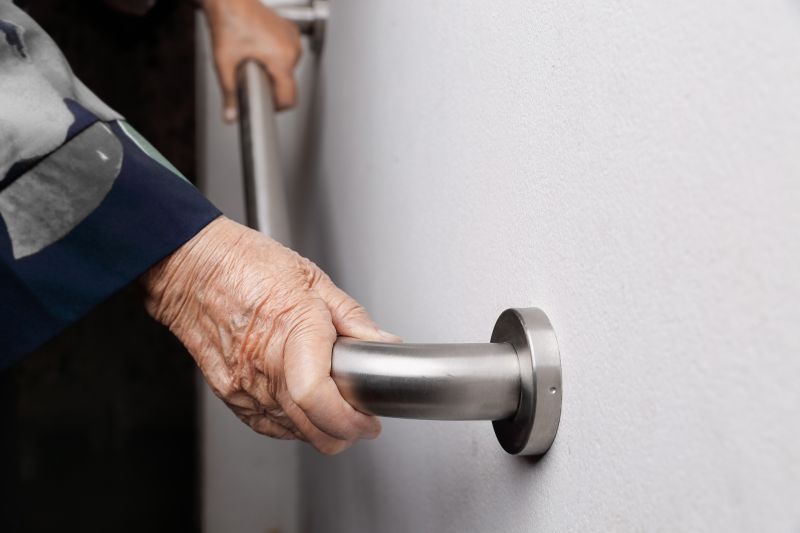 Installing handicap bars is a crucial step in creating accessible environments that support individuals with mobility challenges. These bars provide stability and safety in key areas such as bathrooms, showers, and stairways, helping users maintain balance and independence. When selecting products for handicap bar installations, it is important to consider the specific location, the weight capacity needed, and the ease of installation. Properly chosen and installed bars can significantly enhance safety without compromising the aesthetic of the space.
Top Overall Option
Heavy-Duty Wall-Mounted Grab Bar
A versatile and robust wall-mounted grab bar designed for maximum stability and safety. Constructed from high-quality stainless steel with textured grips, it offers excellent corrosion resistance and secure handling. Its sturdy mounting system ensures reliable support in bathrooms, showers, or stairways, making it a dependable choice for various environments.
Types of Products For Handicap Bar Installations
Wall-Mounted Grab Bars
Fixed bars installed directly onto walls for stable support in bathrooms and showers.
Mobile Support Rails
Portable support rails that can be moved as needed, ideal for temporary or flexible support.
Corner Grab Bars
Designed to fit into corner spaces, providing support in tight or awkward areas.
Tilted or Angled Bars
Bars with angled grips that facilitate easier gripping and support in specific positions.
Extendable Support Bars
Adjustable length support bars that can extend to reach wider or irregular spaces.
Shower Seat Support Bars
Bars specifically designed to support shower seats or assist with transfers.
Toilet Support Bars
Bars installed near toilets to aid in sitting and standing.
Fold-Down Support Bars
Support bars that fold against the wall when not in use to save space.
Recessed Support Bars
Bars installed into wall recesses for a streamlined appearance and space-saving design.
Clamping Support Bars
Support bars that clamp onto existing structures without permanent mounting.
Popular Choices
Commonly used for their durability and corrosion resistance, suitable for bathrooms.
Flexible support options that can be tailored to different spaces and needs.
Maximize support in tight spaces with corner-mounted designs.
Space-saving options that can be folded away when not in use.
Built into the wall for a sleek look and to save space.
Enhanced grip safety with textured surfaces for secure handling.
Portable frames that provide support without permanent installation.
Support rails that can extend to accommodate different needs and spaces.
Designed for extra stability with multiple attachment points.
Support bars with angled grips for easier access and support.
The variety of products available caters to different needs and preferences. From wall-mounted grab bars to mobile support rails, the options are designed to suit various environments and user requirements. Materials such as stainless steel, aluminum, and coated metals are common, offering durability and resistance to corrosion. Some designs feature textured grips for secure handling, while others focus on sleek, unobtrusive profiles that blend seamlessly into their surroundings.
Installation methods vary, with some products requiring professional mounting to ensure maximum safety, especially in high-traffic or weight-bearing applications. Adjustable and modular options provide flexibility for different spaces and user needs. Additionally, some models incorporate additional features like angled grips or extendable arms to reach difficult areas or accommodate specific mobility needs. Proper selection and installation of these products can contribute to a safer, more accessible environment for everyone.
Overall, choosing the right products for handicap bar installations involves understanding the specific requirements of the space and the users. Prioritizing quality, durability, and ease of use will help ensure that the installation provides long-term safety and support. Consulting with accessibility specialists or professionals can also help in making informed decisions that meet safety standards and personal preferences.
Key Buying Considerations
- Weight capacity and load rating to ensure safety and suitability.
- Material durability, especially resistance to moisture and corrosion.
- Installation method and whether professional mounting is recommended.
- Space available for installation and compatibility with existing fixtures.
- Grip texture and ergonomics for secure handling.
- Design and aesthetics to match the environment.
- Adjustability features for versatility and user-specific needs.
- Compliance with safety standards and regulations.
- Ease of cleaning and maintenance requirements.
- Mounting height and positioning for optimal support.
- Type of support (fixed, fold-down, extendable) based on space and use.
- Additional features such as angled grips or support extensions.
- Cost and value for long-term safety and durability.
- Compatibility with other accessibility features in the environment.
- User weight and mobility considerations for appropriate support.